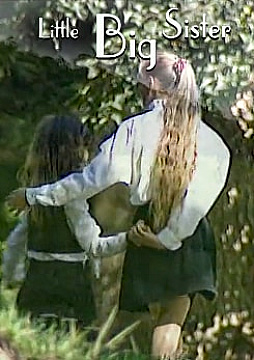
Little Big Sister
Two sisters who survived Auschwitz, are clinging to each other
Sighet, 1944. The same small Transylvanian town that gave the world Elie Wiesel gave the world Hédi and Livi Szmuk, two sisters swept into one deportation, thrown into one fire. Hédi was twenty. Livi was fifteen. Their parents did not survive. The sisters did, clinging to each other through Auschwitz, through the satellite camps of Neuengamme, through Bergen-Belsen, until liberation finally came.
Sweden took them in. But shelter is not the same as welcome, and the sisters knew it: they had arrived in a country that gave them refuge while parts of it made clear they were not entirely wanted there.
That is where their stories should converge. It is where they split.
The film carries them back. To Budapest. To the old world of Sighet, streets that once held a family and a childhood and no longer hold either. By train to Bergen. By ship to Åland Islands, alongside the Café 84 group, retracing the geography of what happened to them as if the map itself could still explain it. Along the way, their childhood is reconstructed not through dialogue but through impression, through reflection, fragments assembled without a single reconstructed word spoken; what cannot be told is shown instead, obliquely, the way memory itself returns: not as narrative, but as image, as weather, as the particular light in a particular street.
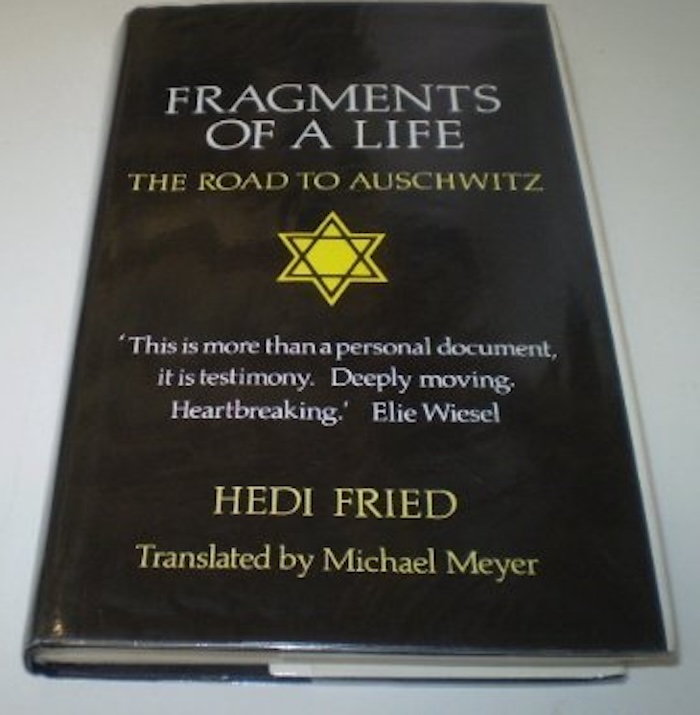
Hédi became a woman who speaks. In 1984 she founded Café 84 in Stockholm, a meeting place where survivors of the Shoah could find each other again, and there she still brings survivors face to face with their own children in "the Dialog," intensive weekends of group therapy that have broken silences inside families for a generation, parents finally telling children what they lived through. Forty-five years after the war, she sat down and wrote it all into a book, Fragments of a Life, translated and published across Sweden, the US, the UK, Germany and Israel. By the time this film was made, her name had already traveled beyond Sweden, the reason many first came to know who she was.
Livi became a woman who doesn't. For her, forgetting is not denial. It is the only shelter she ever found.
A third woman steps into what divides them, not merely a voice reading Hédi's words but a face the camera holds on, willing to be seen: Bibi Andersson, one of Ingmar Bergman's most enduring screen collaborators, an actress who has spent her life inhabiting other people's inner lives now sitting in her own skin, present, unshielded, asking what so many others have been too careful, too polite, too afraid to ask. She does not look away from the answer.
Little Big Sister lives in what divides them: one sister building a life's work and a movement, on remembering; the other on the right to forget; an actress willing to hold open a door most people would rather leave shut, and to be seen doing it. Both sisters are Sighet's daughters. Both survived one fire, found one imperfect refuge. And still, decades on, they hold two irreconcilable answers to a single question: what do you do with a memory that never lets go.
Hédi's book Fragment of a Life
סטודנט-ית? מרצה?
צפו בכל הסרטים בחינם
גישה חופשית דרך האוניברסיטה או המכללה שלך
כניסה דרך האוניברסיטה / המכללה